Table of contents
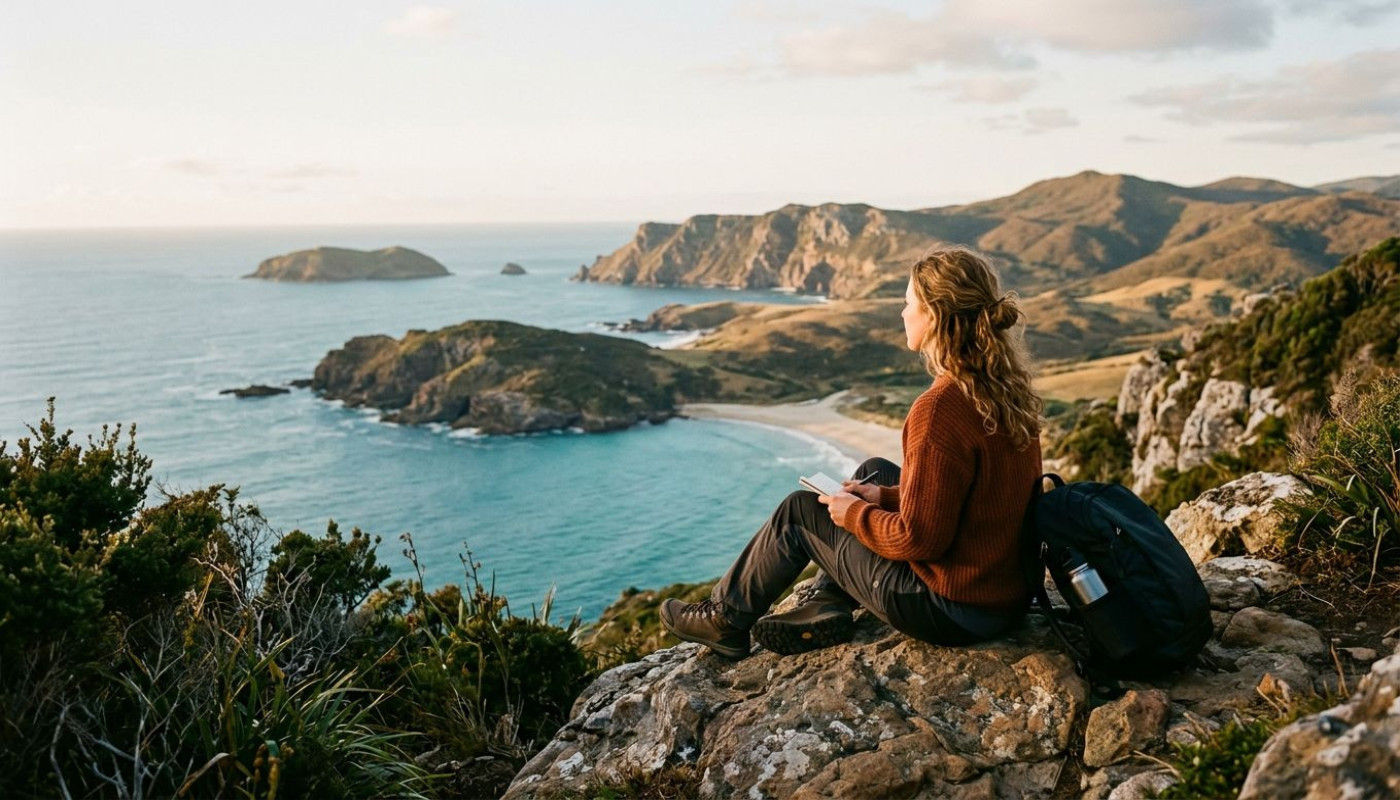
Overtourism has become one of travel’s defining tensions, with the UN World Tourism Organization repeatedly warning about pressure on housing, infrastructure, and heritage sites in high-traffic hubs, and with cities from Venice to Amsterdam tightening rules to manage visitor flows. For solo travelers, the squeeze is felt differently: higher prices, noisier streets, and less space to move at your own pace. A growing counter-trend is emerging in response, and it is reshaping itineraries around places that stay vivid without becoming crowded.
When the “must-see” stops feeling alive
Who wants to queue for wonder? The promise of solo travel has always been autonomy, the freedom to linger in a museum until closing time, to detour on a whim, and to feel a place rather than merely tick it off. Yet in many headline destinations, the modern reality is friction, with timed-entry tickets, tour-group bottlenecks, and streets engineered for flows rather than discovery. In practice, overtourism changes more than the density of people; it changes the texture of a day, because when every corner is optimized for the same photo, local life retreats and travelers end up consuming a polished version of the city.
Data points underline why the feeling is spreading. Europe, for example, remains the world’s most visited region, with international arrivals there reaching roughly three-quarters of a billion in 2024 according to UN Tourism, and that concentration tends to funnel into the same magnets. Housing markets show the strain too, as short-term rentals have grown into a political flashpoint, and local governments have responded with licensing caps and enforcement measures designed to push tourism back toward hotels. For solo travelers, these policy shifts can translate into fewer central budget options, and more time spent navigating restrictions rather than neighborhoods.
The paradox is that the more a city is marketed as “authentic,” the more it can feel curated. Restaurants tilt toward menus that travel well on social media, artisans become souvenir suppliers, and the serendipity that makes solitary wandering rewarding gets replaced by a sense of moving along a track. The hidden-destination movement is not anti-famous places, it is pro-pace: an attempt to recover silence, spontaneity, and the small-scale interactions that are easier to access when you are alone and not buffered by a group itinerary.
That shift matters now because prices have risen sharply across travel categories since the pandemic era, with inflation hitting accommodation and food in many countries, and with aviation capacity still fluctuating on certain routes. When a “top ten” city becomes both expensive and congested, the solo traveler’s calculation changes, and lesser-known alternatives stop being compromises; they become the main event. The destination that used to be a day trip turns into a base, and the neighborhood that was once skipped becomes the reason to go.
Hidden places don’t mean inconvenient ones
Privacy, not isolation. The idea of escaping crowds often conjures images of remote islands or arduous transport, but the most compelling “hidden” destinations today are frequently well-connected cities and regions that sit just outside the loudest spotlight. They are reachable by direct flights, high-speed rail, or dependable buses, and they offer the infrastructure a solo traveler needs: safe, walkable districts, late-night transit, reliable mobile coverage, and a range of lodging that does not force you into either luxury or discomfort.
In fact, the travel industry’s own data suggests that dispersal is becoming a strategic priority. Destinations are increasingly promoting shoulder seasons, secondary neighborhoods, and nearby towns to spread demand, and travelers are responding by building trips around flexibility rather than checklists. Booking patterns on major platforms have shown continued appetite for “off the beaten path” searches, while tourism boards talk openly about shifting visitors away from saturated cores. For someone traveling alone, the benefit is immediate: a broader choice of cafés where you can sit without rushing, museums you can enter without timed slots, and streets where you can walk at night without feeling like you are wading through a theme park.
Convenience also looks different for solo travelers than it does for families or large groups. A compact city with a coherent public-transport grid, a culture of casual dining, and day trips that do not require a car can feel far easier than a famous destination that is logistically complex. Hidden destinations often excel at this because they have not reorganized their centers entirely around tourist circulation, which means daily life still anchors the rhythm, and services remain geared toward residents as much as visitors.
There is also a safety dimension that gets overlooked when “hidden” is treated as a synonym for “unknown.” Solo travel is not reckless travel, and the best lesser-crowded destinations are the ones where you can balance curiosity with common sense, and where information is accessible in English or through clear signage. In many places, that is increasingly the norm, because digital maps, eSIMs, and app-based transit ticketing have lowered the friction that once made secondary destinations harder to approach.
Solo travel thrives on local-scale encounters
Alone, you notice more. One of the quiet truths of solo travel is that crowds can make you invisible in the worst way, turning you into one more unit in a stream. In less saturated destinations, it becomes easier to have the kinds of micro-interactions that shape memory: a bartender explaining what is in a local spirit, a bookseller recommending a writer you have never read, a guide who has time to answer questions because the group is small and genuinely curious. These exchanges are not guaranteed, but they are more likely when the city is not in constant triage mode.
Hidden destinations also tend to preserve a stronger sense of place, not because they are untouched, but because they have not been forced to flatten themselves into a single narrative. Instead of a center that exists mainly as a backdrop, you get multiple layers: residential streets with laundromats and bakeries, markets where people actually shop, and cultural venues that program for locals. For solo travelers, this matters because the day is built from moments, and when the moments are varied, the trip feels longer, richer, and less dominated by the logistics of managing crowds.
Consider how a city reveals itself when you can move at human speed. You can enter a cathedral without feeling you must exit immediately for the next timed slot, and you can sit in a park and journal without competing for space. You can choose a restaurant because it smells good, not because it is the only one with a table at 7 p.m. Even nightlife changes, because bars and music venues in less saturated places often retain a local clientele, which tends to make the atmosphere less performative and more welcoming for someone arriving alone.
This is where hidden destinations redefine “value.” Value is not only about lower prices, although lesser-known places can be more affordable in accommodation and dining, it is about what you get for your time. A two-hour museum queue is expensive, even if the ticket is cheap, and a packed viewpoint can empty a landscape of meaning. Solo travel turns time into the main currency, and hidden destinations often offer a better exchange rate: more unstructured hours that feel genuinely yours.
Mexico City shows how to travel differently
Big cities can still feel personal. Mexico City is not a secret, yet it illustrates how a destination can resist the one-note “must-see” pattern by offering depth across neighborhoods, and by rewarding travelers who step beyond the obvious. The capital’s scale works in a solo traveler’s favor, because you can design days that are intensely local, moving from a morning coffee in a leafy colonia to an afternoon museum visit, and finishing with street food that is meant to be eaten standing up, which is often the most comfortable way to dine alone.
It also benefits from a broader trend in urban travel: travelers are choosing to base themselves in areas that prioritize daily life, walkability, and parks rather than proximity to a single landmark. In Mexico City, that can mean structuring an itinerary around neighborhoods with distinct personalities, and mixing cultural heavyweights with smaller galleries, markets, and guided walks that focus on context rather than spectacle. For solo travelers, the city’s variety reduces pressure, because you do not have to “do it all” to feel satisfied; you can build the trip around what you enjoy, whether that is architecture, contemporary art, food, or day trips into nearby landscapes.
Planning, however, remains the difference between an empowering solo trip and an overwhelming one, particularly in a metropolis where traffic, distances, and choice overload can erode time. That is why curated, practical resources matter, especially those that help you translate curiosity into doable routes, and that flag what is worth booking ahead versus what can be improvised. For readers looking to map out a first trip, https://www.mexicocity-trip.com offers a structured entry point, and it can help turn the city’s sprawl into a coherent experience without forcing you into the most crowded, most predictable circuits.
In the end, Mexico City captures the core lesson of the hidden-destination mindset: you do not need emptiness, you need room to breathe. The most rewarding solo travel today is not about disappearing, it is about reclaiming agency, choosing streets where you can walk without being swept along, and finding cultural experiences that feel like participation rather than consumption. Whether the destination is a smaller city with a growing arts scene or a giant capital with endless neighborhoods, the principle is the same: travel works better when it is not performed for an audience.
Where to start, and what to budget
Ready to trade queues for breathing space? Book accommodation early in smaller markets, and favor shoulder seasons when weather still holds but crowds ease; in many destinations, that single choice improves both price and experience. Set a daily budget with a buffer for local tours, and check city passes, museum free days, and public-transport cards before you arrive. Look for national or municipal incentives too, because some regions subsidize cultural entry or rail deals at specific times of year, and that can meaningfully lower costs for solo travelers who plan with precision.
On the same subject
When Adventure Calls: How Unique Activities Transform Your Travel Story
How First-time Travelers Avoid Classic Planning Mistakes
When Travel Plans Go Off-track: Real Stories Of Itinerary Reinvention

How To Choose The Perfect Luxury Apartment For Your Event Stay?

Exploring The Evolution Of Alpine Sports And Lifestyle Apparel

Comprehensive Guide To Choosing The Right Marine Equipment For Boaters

The Benefits Of Choosing A Holiday Home With Water Features

Iconic Vehicle Designs And Their Influence On Modern Photography
